
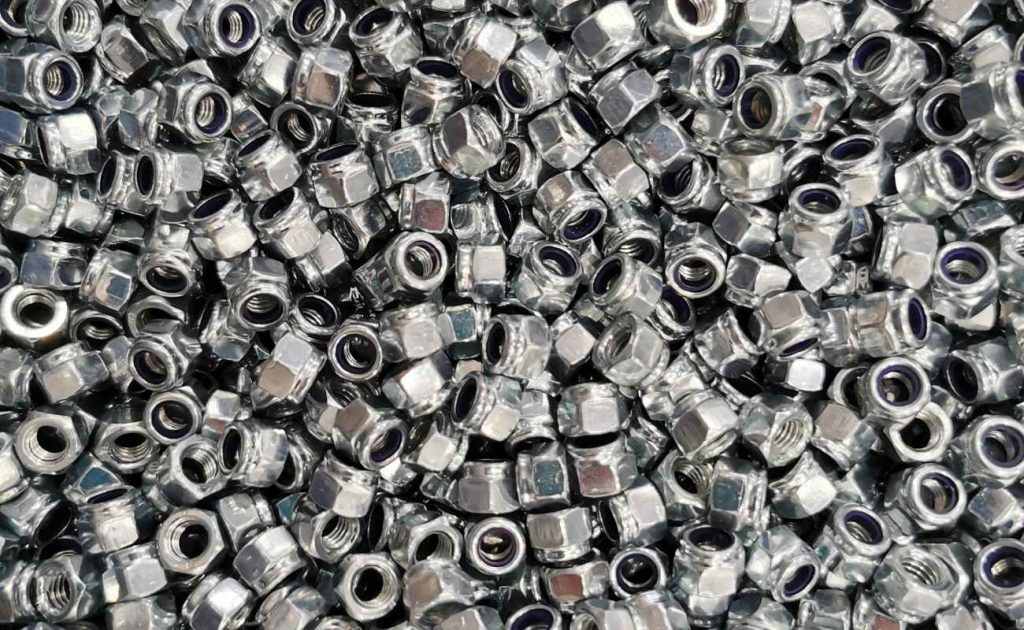
A flush nut is an insert fastener that fits flush against both sides of a sheet metal panel. It's ideal for applications where sheets are too thin to be tapped conventionally but still require load-bearing threads.
Self-clinching flush nuts are easy to install by pressing into a round hole in sheet metal. Their hexagonal head provides both axial and torsional resistance.
What is flush nut?
A flush nut is an industrial fastener that fits flush against the top and bottom of a sheet metal panel, offering smoothness with no protrusions on either side after installation. It's perfect for applications where sheets are too thin to be conventionally tapped and load-bearing threads are necessary, yet smoothness and no protrusions on either side must remain after installation.
Self-clinching nuts are ideal for these applications as they provide strong and reusable female threads in thin panels. Their special feature allows them to provide torque-out and push-out capabilities while leaving both sides of the panel flush.
These nuts can be quickly and easily installed into a round hole in sheet metal, prior to beginning bend or form operations. Furthermore, their hexagonal head offers high axial and torsional strength.
Generally speaking, a nut flush is considered to be the highest possible combination in poker games. This means no other player at the table has any chance to beat it even if they hold a better set of cards to complete the hand. Nonetheless, this term does not apply in community card games like five card draw and stud where there always remains another set of cards available to beat a nut flush.
How do you install a flush nut?
Self-clinching flush nuts are frequently used in ductile steel and aluminium sheeting applications to provide strong female threads with a smooth, flush finish on both sides of the material. They come in various thread sizes and are constructed from 300 series stainless steel.
Nuts are installed by pressing a hexagonal head into the hole to embed it flush in the material. This causes metal displaced by the head to flow evenly around the back-tapered shank, securely fastening the nut in place.
A common misstep is to install a nut without first drilling a hole in the material. Doing this increases the likelihood that it will not seat properly and may even spin.
Installing a nut more securely requires hand threading it onto a bolt before tightening it. This method does not require hammering and produces an easier installation that's also cleaner on materials. This technique works particularly well when replacing a spinning t-nut or tightening one that has become loose.
Can you use Nutserts in wood?
A flush nut (sometimes referred to as a hex drive insert) is used to create an threaded socket in wood substrate, acting much like a wall anchor. These come in various shapes, sizes, and materials.
When working in wood, the best type of flush nut to use depends on the task at hand. For instance, if you need to fasten a piece of plywood onto another piece, then opt for a T-nut.
However, if you need a strong fastener that can securely join two pieces of wood together, Nutsert might be your best bet. They're easy to install and remove, plus reusable so you can reuse them again and again.
Before using a Nutsert, be sure to first drill a pre-drilled hole. Otherwise, it could break loose if placed into an improperly sized hole.
For more information click: